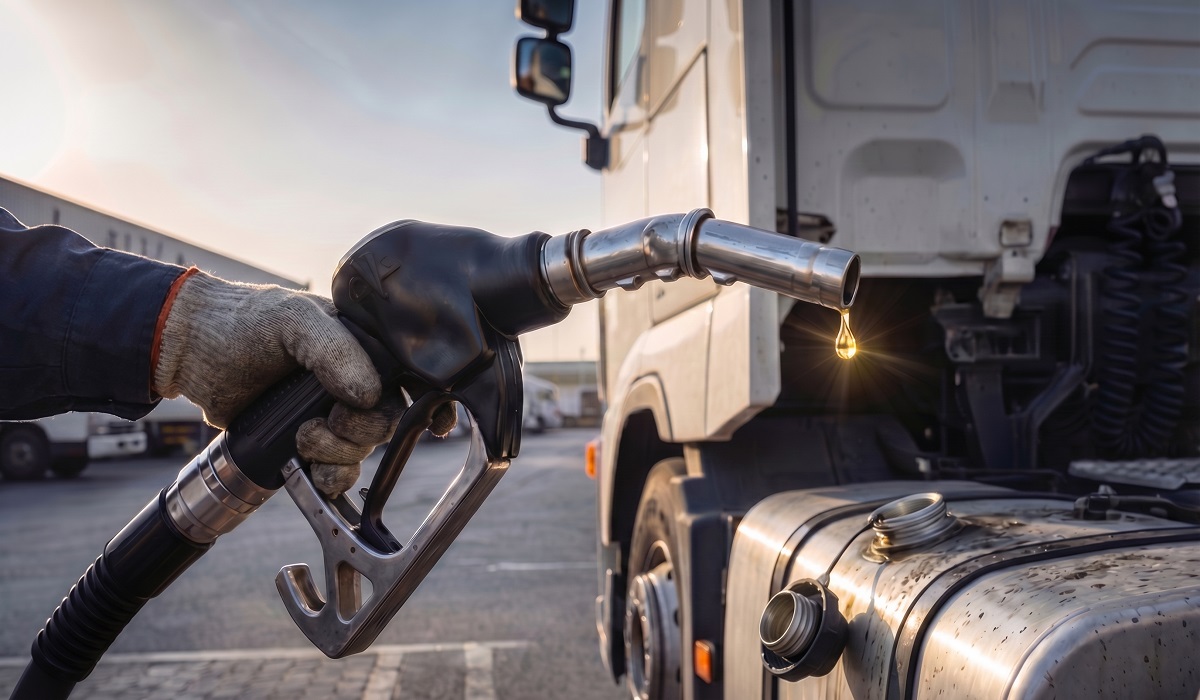
Fuel is one of the biggest line items in any fleet budget. And in Saudi Arabia, where fleets are covering hundreds of kilometres daily across a vast geography, even a 10% drop in fuel spend can mean hundreds of thousands of riyals saved every year. The problem is that most fleet managers are still guessing. They’re looking at monthly fuel invoices without knowing exactly where the money went which routes, which drivers, which habits.
GPS vehicle tracking changes that completely. Not by monitoring people for the sake of it, but by giving you the data to make smarter decisions about how your fleet actually runs.
The Hidden Fuel Drain Most Fleets Ignore
Before talking about solutions, it’s worth being honest about the problem.
Fuel doesn’t just disappear into the tank. It leaks out through specific, predictable behaviors: engines left running while drivers wait, aggressive acceleration in city traffic, routes that add unnecessary kilometres, and poorly maintained vehicles burning more fuel than they should. A single driver who idles for an hour a day adds roughly 3.5 to 4 liters of wasted fuel to your weekly bill (U.S. Department of Energy, n.d., #). Multiply that across a fleet of fifty vehicles and you’re looking at a serious number.
The challenge is visibility. Without data, you can’t tell which vehicles are the problem or how often it’s happening. That’s where vehicle fuel tracking earns its place.
What Smart Vehicle Tracking Actually Does for Fuel Costs
A modern vehicle tracker doesn’t just show you where your vehicles are on a map. It captures a continuous stream of operational data speed, engine status, idle time, acceleration patterns, route taken, and fuel consumption rates. That data feeds into your fleet tracking software, where it becomes actionable intelligence rather than noise.
Here’s what that means in practice.
Idling Reduction Technology Pays Back Fast
Idling reduction technology is one of the fastest ways to see a return on tracking investment. The software flags vehicles that have been stationary with the engine running for more than a set threshold say, five minutes. Your dispatcher gets an alert. The driver gets a notification. Over time, with consistent feedback, the behavior changes.
Fleet operators in the Gulf region who implement active idling controls typically report 15 to 25% reductions in idle time within the first three months (American Transportation Research Institute, n.d., #). In Saudi Arabia’s climate, where drivers often keep air conditioning running during stops, this is not a small saving.
Route Optimization Fuel Savings Are Compounding
Route optimization fuel savings work differently. Every extra kilometre your vehicles travel costs you money. Inefficient routing taking longer roads, backtracking, failing to consolidate stops quietly inflates your fuel bill without anyone noticing.
GPS tracking platforms analyze historical route data and suggest more efficient alternatives. Over a week, saving even two kilometres per trip per vehicle starts to add up. For a delivery fleet making twenty stops a day, route optimization alone can cut total distance driven by 8 to 12 percent (McKinsey & Company, n.d., #).
Driver Behavior Monitoring: The Uncomfortable but Necessary Conversation
This is the part that makes some managers hesitant. But driver behavior monitoring isn’t about catching people out. It’s about identifying patterns that cost money and fixing them with training rather than reprimand.
The data typically reveals three groups of drivers. The majority are already doing fine. A smaller group has one or two habits worth addressing usually harsh braking or excessive speeding on highways. And a small minority are consistently driving in ways that damage both vehicles and fuel budgets. Without tracking, you’d never know which group is which.
Vehicle telemetry data captures exactly this: acceleration patterns, braking frequency, speed relative to the road limit, and cornering behavior (FleetOwner, n.d., #). Aggressive driving burns significantly more fuel than smooth, consistent driving on the same route. One internal study by a UK fleet management firm found that drivers who received monthly feedback on their telemetry scores reduced fuel consumption by an average of 11% within six months. No policy changes. Just data shared with the driver.
Fleet Fuel Management: Seeing the Full Picture
Individual vehicle improvements are useful. Fleet fuel management at scale is where the real structural savings come from.
A proper fleet tracking software platform gives you a consolidated view: total fleet consumption by day, week, or month; consumption per vehicle and per driver; comparison between similar vehicles to identify anomalies; and trends over time that reveal whether your improvements are actually holding.
This matters because fuel theft and fraud are real problems in fleet operations (Transport Intelligence, n.d., #). Vehicles that show high fuel consumption without matching mileage to justify it are flagging a discrepancy worth investigating. The software doesn’t accuse anyone it just surfaces the data so you can ask the right questions.
Fuel efficiency monitoring reports also help with maintenance scheduling. A vehicle whose consumption has risen 15% over three months without a corresponding change in route or load is likely developing a mechanical issue (Fleet Financials, n.d., #). Catching that early is cheaper than fixing it after a breakdown.
Insider Tips: Choosing and Getting the Most from Your Tracking System
Not all tracking systems are built for fleet fuel management. Here’s what to look for before you commit.
Check what telemetry data is actually captured. Some basic trackers only transmit location. You need a system that also records engine data specifically RPM, idle time, fuel levels where the vehicle supports it, and diagnostic codes (SAE International, n.d., #). Without this, you’re only seeing half the picture.
Look for driver scorecards. The best vehicle fuel tracking platforms assign each driver a score based on their weekly behavior. This turns abstract data into something managers can discuss with drivers in a clear, non-confrontational way. Scores also create healthy competition in larger teams.
Verify Saudi coverage. The tracker needs to maintain reliable cellular connectivity across your operating area whether that’s within Riyadh’s city center, on the highway between Dammam and Hofuf, or in remote areas near the borders. Ask vendors specifically about their network coverage in your routes, not just general KSA coverage (Communications, Space and Technology Commission — CST, n.d., #).
Integrate with your fuel card data. The most powerful fleet cost reduction analysis happens when you can cross-reference GPS mileage data with actual fuel transactions. If a vehicle’s fuel card shows a fill-up in Makkah but its GPS shows it was in Taif, that’s a discrepancy worth flagging. Some platforms support this integration natively.
Start with a pilot. Before rolling out across your entire fleet, run the system on ten to fifteen vehicles for sixty days. Calculate the fuel savings specifically attributable to changed behavior. That number becomes your business case for the full deployment and sets realistic expectations for your team.
The Bigger Picture for Saudi Fleet Operations
Saudi Arabia’s logistics and transport sectors are growing fast and fuel costs are growing with them (Saudi Vision 2030, n.d., #). The companies that will run more profitably in this environment are not the ones spending the most on fuel management consultants. They’re the ones building real-time visibility into their daily operations.
Fleet cost reduction through smart tracking is not a one-time project. It’s an ongoing feedback loop. You track, you identify waste, you intervene, you measure the change, and you repeat. Every cycle tightens your operations a little more.
The technology exists today to reduce fuel costs by 20% or more in most commercial fleets (Aberdeen Group, n.d., #). The only question is whether you have the data to act on.
Start with Better Data
If you’re managing a fleet and fuel costs are eating into your margins, the starting point is visibility. Tracking.me offers GPS vehicle tracking built for the demands of fleet operations in Saudi Arabia covering live location, driver behavior monitoring, idle tracking, route analysis, and fuel efficiency reporting in one platform.
The fuel savings are measurable. The ROI timeline is short. And the operational clarity you gain goes well beyond the fuel bill.
References
Aberdeen Group. (n.d.). https://www.aberdeen.com
American Transportation Research Institute. (n.d.). https://atri-online.org
Communications, Space and Technology Commission — CST. (n.d.). https://www.cst.gov.sa
Fleet Financials. (n.d.). https://www.fleetfinancials.com
FleetOwner. (n.d.). https://www.fleetowner.com
McKinsey & Company. (n.d.). https://www.mckinsey.com
SAE International. (n.d.). https://www.sae.org
Saudi Vision 2030. (n.d.). https://www.vision2030.gov.sa
Transport Intelligence. (n.d.). https://www.ti-insight.com
U.S. Department of Energy. (n.d.). https://www.energy.gov