
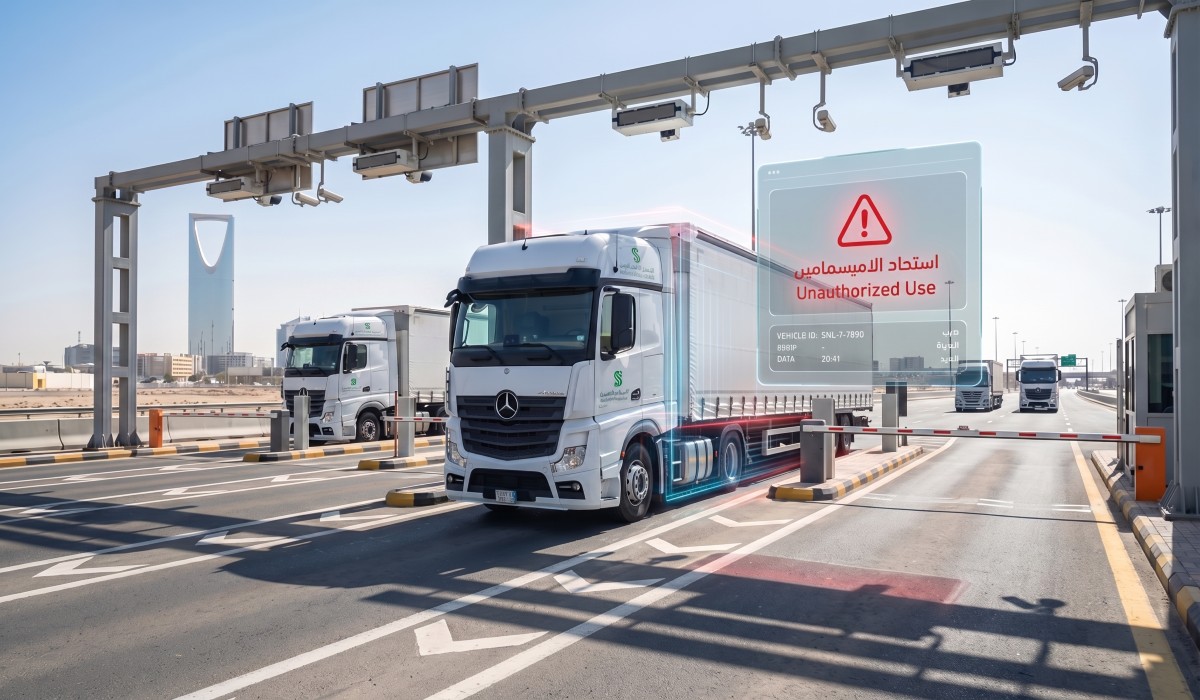
Running a fleet in Saudi Arabia isn’t just about keeping vehicles on the road. It’s about knowing exactly what the law expects from you and staying ahead of it. Whether you manage five trucks or fifty, fleet compliance Saudi Arabia is one of those areas where being unprepared doesn’t just cost you money. It can cost you your operating license. That’s why more fleet managers across the Kingdom are turning to tracking.me to manage compliance, monitor vehicles, and stay on the right side of the law all from one place.
This guide covers what every fleet manager and business owner needs to know, from driver safety regulations Saudi Arabia has set in place, to GPS tracking compliance legal requirements, to how choosing the best fleet management company in KSA can take most of this off your plate.
Let’s get into it.
Why Compliance Is Non-Negotiable Right Now
Saudi Arabia’s transport sector is changing fast. Vision 2030 has pushed the government to modernize infrastructure and tighten oversight across industries and fleet management sits right in the middle of that (Saudi Vision 2030, n.d., #). The Saudi Transport General Authority (TGA) along with the Ministry of Transport have issued clearer standards over the past few years, and enforcement has become noticeably more active (Transport General Authority, n.d., #).
Fines are real. License suspensions happen. And if you’re operating commercial vehicles without meeting the minimum standards, you’re exposed to both regulatory penalties and serious liability if something goes wrong on the road.
Understanding the rules isn’t optional anymore. It’s just good business.
Driver Safety Regulations in Saudi Arabia
Your drivers are your biggest compliance variable. The Kingdom requires that all commercial drivers hold valid licenses appropriate to their vehicle class, with regular renewal checks in place (Saudi Ministry of Interior — Traffic Department, n.d., #). Beyond that, driver safety regulations Saudi Arabia enforces include mandatory pre-employment medical screening and periodic health assessments for drivers operating heavy goods vehicles.
Fatigue is a major concern on long-haul routes, especially across the Riyadh-Dammam-Jeddah corridor. The TGA has issued guidelines on rest periods, and violations particularly those tied to accidents are treated seriously by insurance providers and courts alike (Transport General Authority, n.d., #).
Practical step: Keep a digital record of every driver’s license validity dates, medical check history, and any incidents. Doing this on paper in 2025 is asking for problems.
Driving Hours Regulation Saudi Arabia
This one catches a lot of fleet operators off guard. Driving hours regulation Saudi Arabia applies to commercial vehicle drivers and sets clear caps on continuous driving time. Drivers are generally not permitted to operate continuously for more than four to five hours without a mandatory rest break. Total daily driving hours are capped, and weekly maximums apply as well.
These rules mirror international standards similar in structure to EU Working Time Directives (European Commission, n.d., #)which makes sense given Saudi Arabia’s integration into global logistics chains. If your fleet operates cross-border routes through the GCC, you’ll also need to stay aligned with regional agreements that cover driver hours (GCC Secretariat General, n.d., #).
The best way to monitor this accurately is through a telematics system that tracks ignition-on time and automatically flags violations before they become incidents. tracking.me does exactly that, giving you real-time alerts before a violation turns into a fine.
Vehicle Maintenance Standards Saudi Arabia
Every commercial vehicle operating in Saudi Arabia must pass periodic technical inspections through authorized centers. Vehicle maintenance standards Saudi Arabia requires include verifiable brake performance, tire condition, lights, emissions output, and load capacity checks (Saudi Standards, Metrology and Quality Organization — SASO, n.d., #) (Saudi Standards, Metrology and Quality Organization — SASO, n.d., #).
Beyond passing inspection, fleet operators are expected to maintain service logs. If a vehicle is involved in an accident and you can’t produce recent maintenance records, your insurance claim and legal standing both take a hit (Saudi Ministry of Justice, n.d., #).
Set your maintenance schedule slightly ahead of the legal minimums. Vehicles that operate in high-temperature conditions which is most of the year in Saudi Arabia degrade faster than manufacturers’ default service intervals assume.
Fleet Insurance Requirements Saudi Arabia
All commercial vehicles must carry third-party liability insurance as a minimum legal requirement. But if you’re relying on just the legal minimum, you’re leaving your business exposed. Fleet insurance requirements Saudi Arabia outlines include comprehensive coverage for commercial fleets, particularly those transporting goods, equipment, or passengers (Saudi Central Bank — SAMA, n.d., #).
Insurers in the Kingdom increasingly ask for telematics data during underwriting. Fleets with GPS tracking systems in place and clean driving behavior records often qualify for lower premiums (Insurance Journal, n.d., #). That’s a direct financial incentive to invest in proper monitoring.
Also worth knowing: fleet insurance policies typically require you to maintain compliance with driver hour rules and vehicle maintenance standards. Non-compliance can void a claim. Read the policy details carefully, or have a legal advisor do it for you.
SAAQ Requirements Fleet
The Saudi Authority for Accredited Valuers (SAAQ) intersects with fleet compliance in specific commercial and leasing contexts particularly when fleet assets are involved in financing, leasing structures, or public tender contracts (SAAQ, n.d., #). SAAQ requirements fleet operators must meet in these scenarios relate to proper asset valuation and documentation.
If you’re operating a lease fleet or managing vehicles under a government supply contract, get a compliance advisor involved early. The paperwork trail matters here.
Vehicle Tracking Regulations Saudi Arabia and GPS Compliance
This is the area where compliance has moved most quickly. Vehicle tracking regulations Saudi Arabia now require commercial fleets above a certain threshold to have GPS tracking installed and operational. The TGA mandates that tracking data must meet specific technical standards and, in some categories, be accessible to authorities on request (Transport General Authority, n.d., #).
GPS tracking compliance legal requirements also touch on data handling. Tracking data that includes driver behavior, location history, and route patterns is subject to Saudi data protection expectations (Saudi Data and AI Authority — SDAIA, n.d., #). You can’t just install any off-the-shelf tracker the system has to meet accreditation standards.
tracking.me is built specifically for the Saudi market, meeting local compliance requirements while giving fleet managers the visibility they need across every vehicle in their operation.
Fuel Consumption Regulations Saudi Arabia
Fuel consumption regulations Saudi Arabia has been tightening as part of broader environmental and efficiency targets (Saudi Ministry of Energy, n.d., #). Commercial fleets are increasingly expected to meet fuel efficiency benchmarks, particularly for newer vehicle acquisitions.
This doesn’t mean older vehicles are immediately non-compliant, but fleet renewal decisions need to account for fuel efficiency standards when purchasing or leasing new vehicles. The Saudi Standards, Metrology and Quality Organization (SASO) sets the applicable technical benchmarks (SASO, n.d., #).
Fleet management software that tracks fuel consumption per vehicle and per driver gives you the data you need to manage this proactively and catch issues like fuel theft or inefficient driving habits that push you outside acceptable ranges.
How to Choose the Best Fleet Management Company in KSA
Getting all of this right on your own is possible. But for most fleet operators running five or more vehicles, partnering with a specialist fleet management company in KSA is the smarter call.
Here’s what to look for:
Certified GPS and telematics systems that meet TGA and SASO requirements not just hardware, but software that generates compliance-ready reports.
Driver behavior monitoring that covers speeding, harsh braking, and long driving hours, with automated alerts before violations accumulate (FleetOwner, n.d., #).
Maintenance scheduling integration so your service records are always current and audit-ready.
Insurance-compatible reporting that gives you the documentation insurers and regulators expect.
Local support someone who can answer questions about Saudi-specific requirements, not a generic global helpline reading from a script.
Achieving fleet safety compliance becomes a lot more manageable when the right systems are doing the heavy lifting. tracking.me checks every one of these boxes, and it’s built by a team that understands what Saudi fleet operators actually deal with day to day.
Stay Ahead, Not Just Compliant
Compliance in Saudi Arabia’s fleet sector isn’t a one-time project. Regulations evolve, standards get updated, and enforcement patterns shift (Geospatial World, n.d., #). The fleet operators who stay out of trouble aren’t necessarily the biggest or the most resourced they’re the ones who’ve built compliance into their daily operations rather than treating it as an annual review.
Start with the basics: know your driver hours, keep your maintenance records clean, make sure your vehicles carry proper insurance, and get a GPS tracking solution that meets the current vehicle tracking regulations Saudi Arabia requires. Tools like tracking.me make that last part straightforward no guesswork, no gaps.
Do those things consistently, and you’re already ahead of most fleets on the road.
References
European Commission. (n.d.). https://transport.ec.europa.eu
FleetOwner. (n.d.). https://www.fleetowner.com
GCC Secretariat General. (n.d.). https://www.gcc-sg.org
Geospatial World. (n.d.). https://www.geospatialworld.net
Insurance Journal. (n.d.). https://www.insurancejournal.com
SAAQ. (n.d.). https://www.saaq.org.sa
SASO. (n.d.). https://www.saso.gov.sa
Saudi Central Bank — SAMA. (n.d.). https://www.sama.gov.sa
Saudi Data and AI Authority — SDAIA. (n.d.). https://sdaia.gov.sa
Saudi Ministry of Energy. (n.d.). https://www.moenergy.gov.sa
Saudi Ministry of Interior — Traffic Department. (n.d.). https://www.moi.gov.sa
Saudi Ministry of Justice. (n.d.). https://www.moj.gov.sa
Saudi Standards, Metrology and Quality Organization — SASO. (n.d.). https://www.saso.gov.sa
Saudi Vision 2030. (n.d.). https://www.vision2030.gov.sa
Transport General Authority. (n.d.). https://www.tga.gov.sa
Transport General Authority. (n.d.). https://www.tga.gov.sa Transport General Authority. (n.d.). https://www.tga.gov.sa