Every operations manager in Saudi Arabia has had that moment. You need a specific piece of equipment. You call the site supervisor. He calls someone else. Twenty minutes later, nobody knows where it is. The job stalls. The client asks questions. And somewhere in your head, you’re doing the math on what this delay is actually costing you.
Lost and misplaced assets are not a small problem. A 2023 study by (Zebra Technologies, n.d., #)> found that businesses lose up to 20% of their annual equipment budget to theft, misplacement, and poor visibility. For companies operating across multiple sites in the Kingdom, from Riyadh to Jeddah to NEOM that number adds up to real money, fast.
The good news? This is a solved problem. Not theoretically. Practically. Asset tracking software has matured to the point where you can locate any tagged item, anywhere, in seconds.
Why Lost Assets Cost More Than You Think
Most managers calculate asset loss by replacement cost. That’s the wrong number.
The real cost includes the labor hours spent searching, the project delays caused by unavailable equipment, the emergency rentals to plug the gap, and the insurance premiums that rise after a theft claim. Add all of that together and a single missing asset can cost three to five times its purchase price before the year is out.
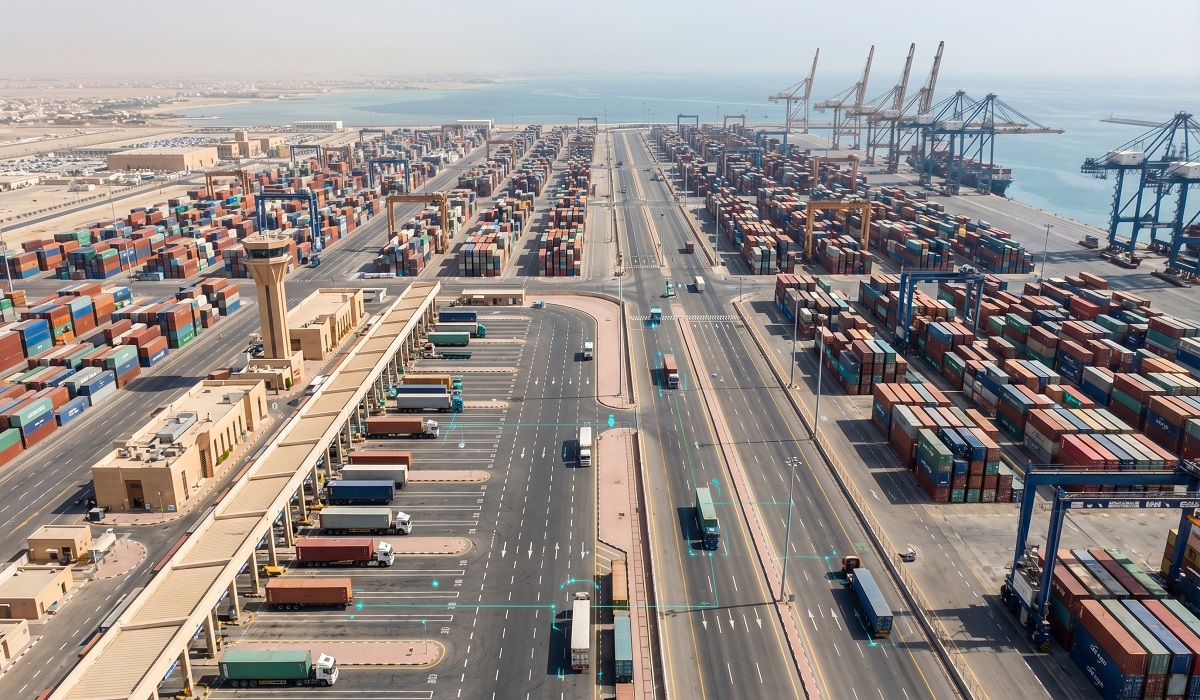
Saudi Arabia’s construction and logistics sectors are growing at a pace that (Vision 2030, n.d., #)is actively accelerating. More projects, more equipment on the move, more exposure to loss. Companies that are still managing assets through spreadsheets and manual check-ins are running into a wall and it’s not getting easier.
What Real-Time Asset Visibility Actually Looks Like
Here’s where real-time asset tracking changes the picture entirely.
A GPS asset tracking system assigns a physical tracker to each piece of equipment, vehicle, or high-value item. That tracker communicates its location continuously to a central asset tracking platform, which your team can access from any device (Geotab, n.d., #). No more calling around. No more “I think it was taken to Site B last Thursday.”
You open the dashboard. You see the asset. You know exactly where it is and when it last moved.
Tracking.me offers this kind of live visibility across your entire asset inventory whether you’re managing five vehicles or five hundred pieces of industrial equipment. The platform is designed for operations teams that don’t want to spend time learning complicated software. The map is the interface. The data is clear. The alerts are actionable.
GPS Asset Tracking vs. Passive Tracking: What’s the Difference?
Not all trackers work the same way. Understanding the difference matters when you’re choosing a system.
Passive tracking records location data and uploads it when the device connects to a reader. It’s cheaper upfront but tells you where something was, not where it is (Samsara, n.d., #). For auditing and compliance, fine. For recovering a missing asset in the next hour, not useful.
GPS asset tracking gives you continuous, live location updates via cellular or satellite networks. You get a ping the moment an asset moves outside a defined area. You get historical route data. You get tamper alerts if someone tries to remove the tracker. This is the version that actually solves the problem.
The third category worth knowing is wireless asset tracking, which uses Bluetooth Low Energy (BLE) or RFID for indoor environments (IBM, n.d., #). Think hospital equipment, warehouse inventory, or tools stored inside a facility. The range is shorter, but accuracy inside a building is often better than GPS. The best asset tracking platforms combine all three technologies so nothing falls through the gaps.
What to Look for in an Asset Tracker Device
The hardware matters as much as the software. A good asset tracker device should:
Survive harsh environments (Saudi summers push temperatures past 45°C regularly (Met Office, n.d., #)
Offer a battery life of at least six months without replacement
Be compact enough to attach discretely to equipment without getting in the way
Transmit location data frequently enough for your use case
Come with tamper detection so you know if someone tries to remove it
Industrial-grade trackers built for the Gulf climate aren’t the same as consumer GPS devices. Ask any vendor about their IP rating (dust and water resistance) and operating temperature range before you commit.
Tracking.me’s asset tracker devices are built for field conditions, not office environments. That matters when your equipment is parked on a dusty construction site in Dammam.
Insider Tips: Getting Maximum ROI from Your Tracking System
Buying the technology is step one. Getting value from it is a different conversation.
Start with your highest-value assets. Don’t try to track everything at once. Identify the top 20% of your inventory by cost or criticality and start there. Calculate how often those assets go missing or sit idle, and you’ll have a clear baseline to measure your ROI against (Harvard Business Review, n.d., #).
Set geofence alerts immediately. Most asset tracking software lets you draw a virtual boundary around a site or storage area. The moment an asset crosses that boundary outside of approved hours, you get an alert. This single feature recovers more assets than any other because it catches movement in real time, not after the fact.
Use utilization data, not just location. The best equipment tracking solutions don’t just tell you where your assets are they tell you how often they’re actually being used. An excavator that’s sitting idle 60% of the time is a capital allocation problem. That data changes procurement decisions.
Train your site supervisors, not just your IT team. Asset tracking works best when the people closest to the equipment understand how to use the system. A simple onboarding session for site-level staff pays for itself in faster recovery times and fewer “we don’t know where it is” situations.
Review your reports monthly. The asset tracking ROI compounds when you use the data proactively adjusting where equipment is deployed, catching patterns of misuse early, and renegotiating insurance premiums based on documented asset security.
Common Questions About Implementing Asset Tracking
How long does setup take? For most mid-sized operations, you can have a basic asset tracking system running within a week. The trackers ship pre-configured. You attach them, log into the platform, and you’re live. The complexity scales with your fleet size, not the technology itself.
What about connectivity in remote areas? Satellite-capable trackers exist for assets operating in desert or off-grid environments. Cellular coverage in Saudi Arabia is strong across urban and semi-urban areas (OpenSignal, n.d., #), but for NEOM-scale remote projects, confirm with your vendor that their network coverage matches your geography.
Is the data secure? Saudi Arabia’s PDPL (Personal Data Protection Law) has raised the bar on data handling (SDAIA (PDPL), n.d., #). Reputable platforms like Tracking.me store data in compliant infrastructure and give you full control over access permissions. Check this before signing any contract.
The Shift Happening Right Now in Saudi Operations
Companies that adopted asset management software early are running leaner than their competitors. Not by accident. When you know where everything is, you stop renting equipment you already own. You stop buying replacements for items that aren’t actually lost. You stop paying overtime for workers who spend their morning tracking down tools.
That’s the real pitch for real-time asset tracking it’s not a technology story. It’s a margin story.
Saudi Arabia’s industrial and logistics sector is in the middle of a serious growth phase. The companies that build efficient asset management into their operations now will be better positioned to scale without the overhead chaos that comes with rapid growth.
Take the Next Step
If you’re managing assets across multiple sites and still dealing with the phone calls, the delays, and the mystery of where things went the fix is not more people or more process. It’s better visibility.
Tracking.me offers a purpose-built asset management software platform with GPS and wireless tracking, real-time dashboards, geofencing, and the kind of reporting that actually helps you make decisions. Start with a demo, test it against your real assets, and measure what changes.
The assets are out there. You just need to be able to see them.
References
Geotab. (n.d.). https://www.geotab.com/blog/gps-tracking/
Harvard Business Review. (n.d.). https://hbr.org/2014/10/a-refresher-on-the-pareto-principle
IBM. (n.d.). https://www.ibm.com/topics/rfid
Met Office. (n.d.). https://www.metoffice.gov.uk/weather/climate/guides/global-extremes
OpenSignal. (n.d.). https://www.opensignal.com/reports/2023/saudi-arabia/mobile-network-experience
Samsara. (n.d.). https://www.samsara.com/guides/gps-fleet-tracking/
SDAIA (PDPL). (n.d.). https://sdaia.gov.sa/en/SDAIA/about/Pages/PDPL.aspx
Vision 2030. (n.d.). https://www.vision2030.gov.sa/en/
Zebra Technologies. (n.d.). https://www.zebra.com/us/en/resource-library/white-papers/visibility-value-index.html